
From West Africa to Macao, Adebayo Fadairo’s academic journey has spanned continents. As the first Nigerian to earn a doctoral degree from the University of Macau (UM), he has continued at the university as a postdoctoral researcher. During his PhD studies, he focused on alternative fuels to address energy challenges in Africa. Today, his research has expanded to include wastewater recycling and sustainable resource recovery. Along the way, Dr Fadairo has gained rigorous academic training and invaluable experience in an international research environment shaped by strong mentorship. He says his decision to study abroad was driven by a simple desire for a ‘broader perspective’—one that he hopes will ultimately enable him to contribute meaningfully to the development of his homeland.
Broadening his horizons
Dr Fadairo clearly remembers leaving his hometown seven years ago to begin his academic journey at UM. Born and raised in Nigeria, he completed his bachelor’s and master’s degrees in mechanical engineering before taking up a lectureship at Obafemi Awolowo University. Despite this steady academic progression, he felt compelled to broaden his horizons.
‘I was eager for an opportunity to further develop my expertise, particularly through more hands-on experience in science, technology, and engineering,’ Dr Fadairo recalls. Seeking a broader global perspective, he turned his attention to China, a country at the forefront of scientific and technological advancement. However, identifying the right institution was not straightforward. Many universities in the Chinese mainland primarily use Chinese as the language of instruction, while he was seeking an international research environment with world-class facilities where English was the main medium of communication.
Against this backdrop, UM stood out as the ideal choice. ‘The University of Macau has a strong international community, attracting students from around the world, and its global reputation is highly regarded. It offered exactly the kind of academic platform I was seeking,’ Dr Fadairo says.
An unforeseen interruption
Fadairo received an offer of admission to UM’s PhD programme in electromechanical engineering in 2017 and planned to enrol in January 2018. However, delays in the Nigerian government’s scholarship approval process postponed his enrolment, and he did not begin his research until January 2019.
Having finally commenced his PhD studies, Fadairo had little time to settle into a stable routine. After completing his first year, he returned to Nigeria in December 2019 to spend Christmas with his family. Soon afterwards, the COVID-19 pandemic broke out. As Macao’s borders closed and international travel was severely restricted, non-residents were unable to re-enter the city. What was meant to be a short holiday visit unexpectedly turned into a prolonged absence, bringing his research to an abrupt halt.
The disruption lasted nearly three years. During this period, Fadairo resumed his teaching position at Obafemi Awolowo University while waiting for travel restrictions to ease. Although he managed to conduct limited experimental work using the facilities available in Nigeria, the core components of his doctoral research remained on hold.
Only in 2023, when pandemic-related restrictions were gradually lifted, was Fadairo finally able to return to UM and resume his PhD studies.
A mentor who made the difference
Research is never a solitary journey. When Dr Fadairo first applied to UM, he reached out by email to a prospective supervisor—and received a reply almost immediately.
‘Prof Wong Pak Kin responded within five minutes. I had just sent the email and was still sitting at my computer when his reply arrived. I was both surprised and delighted,’ Dr Fadairo recalls. That swift response not only reassured him but also laid the foundation for a strong and supportive mentor–student relationship. Prof Wong guided Dr Fadairo’s research, helped him define a clear academic direction, and supported him through periods of uncertainty and difficulty. ‘He was willing to take me on as a doctoral student and welcomed me wholeheartedly,’ Dr Fadairo says.
For Dr Fadairo, Prof Wong became more than a supervisor—he was also a father figure. ‘Before deciding on a research direction, doctoral students need to work closely with their supervisors to set goals and identify the right path forward. Prof Wong helped me do exactly that. He offered careful guidance and constant encouragement,’ he says. ‘Everyone experiences setbacks. In those moments, you need someone who reminds you to keep going—that success may be just around the corner. Prof Wong was that kind of mentor.’
That mentorship proved particularly important when Dr Fadairo encountered a research obstacle. His doctoral work required a cytotoxicity analysis—an area outside his engineering background—and conducting the analysis required collaboration with specialists from other disciplines. As he did not speak Mandarin or Cantonese, seeking assistance independently was challenging. Recognising the difficulty, Prof Wong contacted a colleague at the UM Institute of Chinese Medical Sciences, who arranged for a doctoral student to assist with the analysis.
‘When you’re at your lowest point, you need someone willing to lend a hand. Prof Wong was always that person,’ Dr Fadairo says. ‘He guided me with patience and care, and even today, he remains my mentor.’
Research with purpose: From neem oil to cleaner emissions
Dr Fadairo’s doctoral research centred on a subject that is both globally significant and deeply personal: alternative fuels.
The topic may seem straightforward, but the challenges behind it are complex. Dr Fadairo notes that while fossil fuels continue to power modern society, they are also a major source of environmental pollution. Although electric vehicles offer a promising low-emission future, they have not yet become a practical solution for heavy-duty transportation in much of Africa.
‘In many parts of Africa, fossil fuels remain the dominant energy source. There is clear interest in electric vehicles, but the infrastructure simply isn’t there yet. Charging stations are limited, and electricity supply can be unreliable in many regions. For large-scale transport, electric vehicles are not yet a realistic option. That is why my research on renewable fuel alternatives is particularly relevant to Africa,’ Dr Fadairo explains.
One focus of Dr Fadairo’s work was the production of biodiesel derived from neem oil. The neem tree grows widely across the African continent, and its seed oil is non-edible, meaning that fuel production does not compete with food resources. The oil is affordable, locally available, and well suited to regional production.
‘I converted biodiesel from neem oil and blended it with conventional diesel in varying proportions, up to 20 per cent. I then analysed the resulting emissions—particularly particulate matter—examining their physical and chemical properties as well as their effects on human cells,’ Dr Fadairo explains. The findings were promising: compared with conventional diesel, the biodiesel blends demonstrated lower cytotoxicity, suggesting reduced potential harm to human health.
Dr Fadairo has published several academic papers based on this research, underscoring how locally sourced renewable materials can help mitigate pollution while offering practical energy solutions tailored to regional needs.
The postdoctoral journey
During his doctoral studies, Dr Fadairo came to see UM not only as a place of supervision but also as a vibrant and collaborative research community. He regularly conducted experiments at the Centre for Regional Oceans, working alongside master’s and doctoral students from diverse academic backgrounds. This exposure to interdisciplinary research broadened his scientific perspective and strengthened his technical capabilities.
‘UM has given me hands-on experience with advanced research equipment and the opportunity to collaborate with students from around the world,’ Dr Fadairo says. ‘These experiences will help me enhance my research productivity, strengthen my teaching skills, and uphold high academic standards when I return to Nigeria.’
It was this supportive environment that drew Dr Fadairo back to Macao after completing his PhD in early 2025. Following a brief return to Nigeria, he resumed his work at UM as a postdoctoral researcher. Now under the supervision of Prof Hao Tianwei, Dr Fadairo is contributing to a new project focused on aerobic granular sludge technology for wastewater treatment. The approach harnesses specialised microbial communities to improve wastewater treatment efficiency, making water reuse more sustainable and practical.
‘I became acquainted with Prof Hao during my PhD,’ Dr Fadairo explains. ‘He allowed me to use equipment in his laboratory and encouraged his postgraduate students to collaborate with me, which was immensely helpful. Wastewater treatment is one of Prof Hao’s main research areas. I joined his team to study how aerobic granular sludge can be cultivated in a sequencing batch reactor. Once scaled up, the technology has the potential to enhance wastewater treatment processes and support more effective water reuse.’
Returning home, giving forward
After completing his PhD and before beginning his postdoctoral research, Dr Fadairo returned to Nigeria for three months to teach at Obafemi Awolowo University. The welcome he received reaffirmed the significance of his journey.
‘Everyone was happy for me because I earned my PhD from UM. It’s an internationally recognised university, and my students are proud of that,’ Dr Fadairo says. ‘I can also see how much I’ve grown as a teacher.’ During his time back home, he shared his research with undergraduate students, translating complex scientific concepts into clear and engaging lessons without sacrificing academic rigour. ‘Some of my students expressed interest in pursuing postgraduate studies at UM. They want to follow a similar path,’ he says.
As Dr Fadairo continues his postdoctoral work, he often reflects on what his time at UM has meant to him: access to advanced research facilities, dedicated mentorship, interdisciplinary collaboration, and friendships that feel like family. ‘In this city and on this campus, I found a second home. The people here have supported me and helped me grow, both academically and personally,’ he says.
Before long, Dr Fadairo will return to Nigeria to continue his academic career. He will carry with him not only his doctoral and postdoctoral training, but also the resilience, research mindset, and collaborative spirit cultivated at UM. ‘When I go back, I hope to mentor young scholars and share what I’ve learned at UM,’ Dr Fadairo says—extending the impact of his journey beyond borders.
Chinese Text: U Wai Ip, UM Reporter Wang Yanling & Li Yayi
Chinese Editor: Gigi Fan
English Translation: Bess Che
Photo: Editorial Board
Video: Hasen Cai, David Tong, Sam Chan & UM Reporter Yao Yi
Source: My UM Issue 153
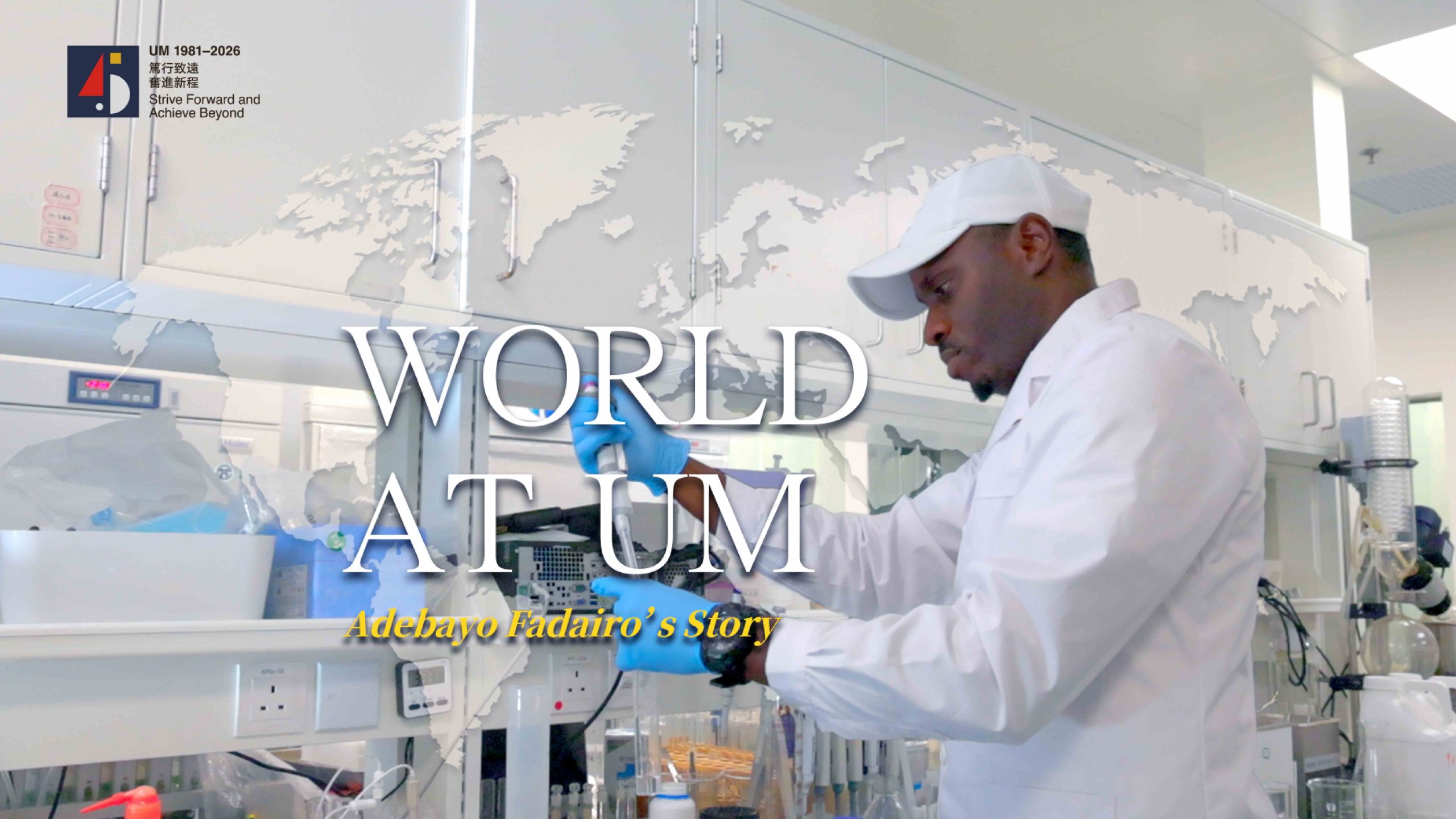
Dr Adebayo Fadairo
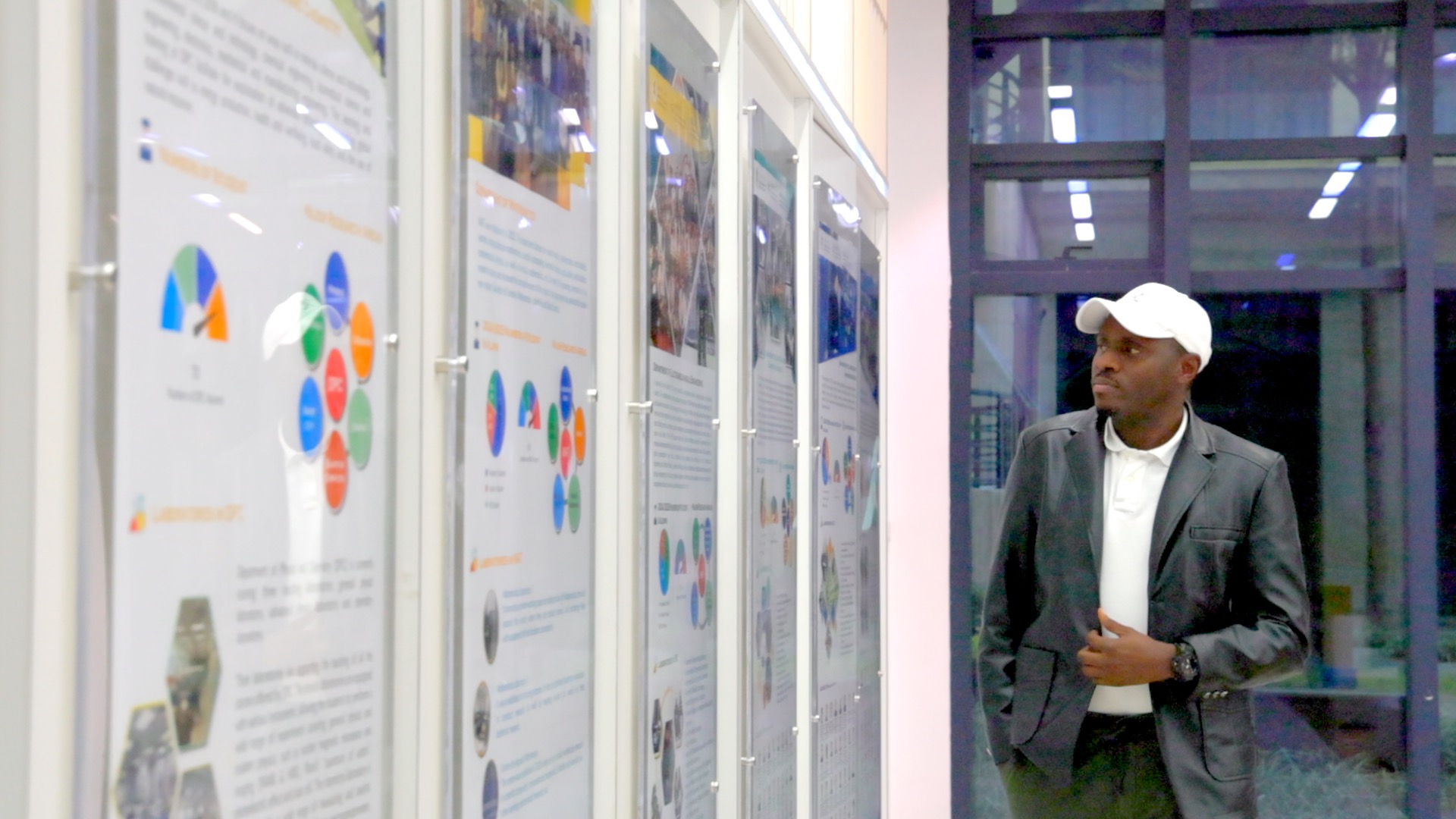
Dr Fadairo is the first Nigerian to earn a doctoral degree from UM
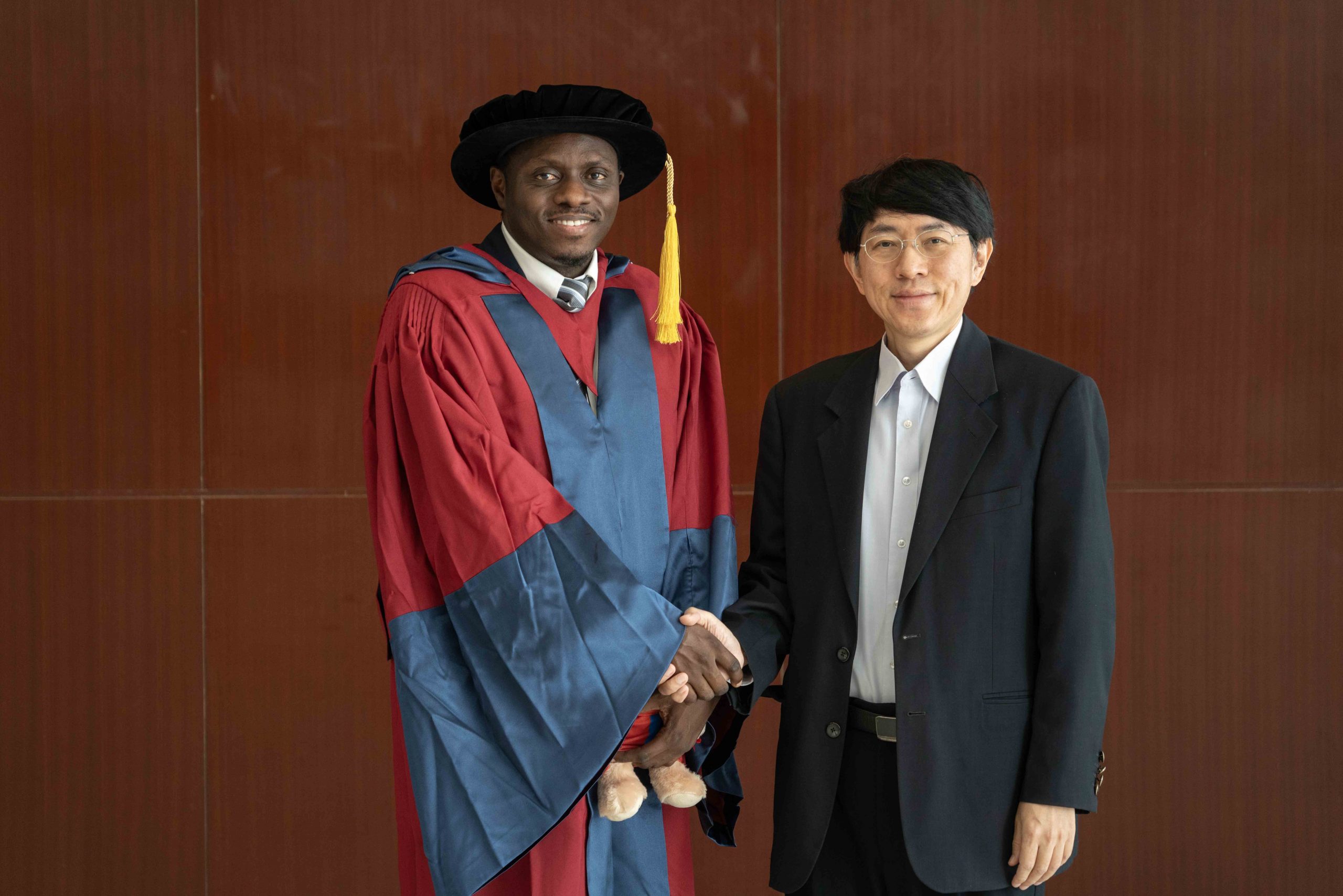
Dr Fadairo with Prof Wong Pak Kin
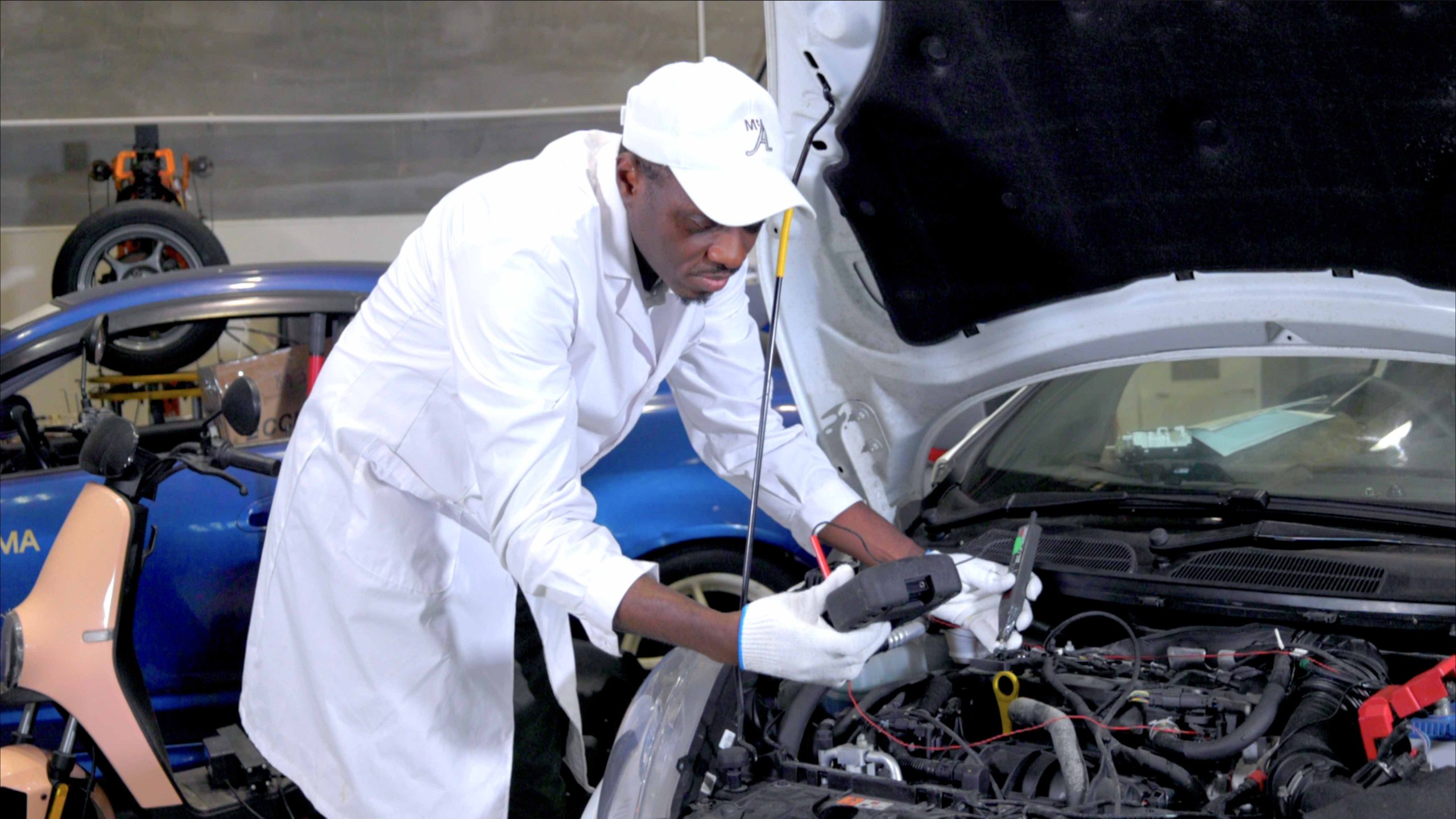
Dr Fadairo studies alternative fuels during his PhD
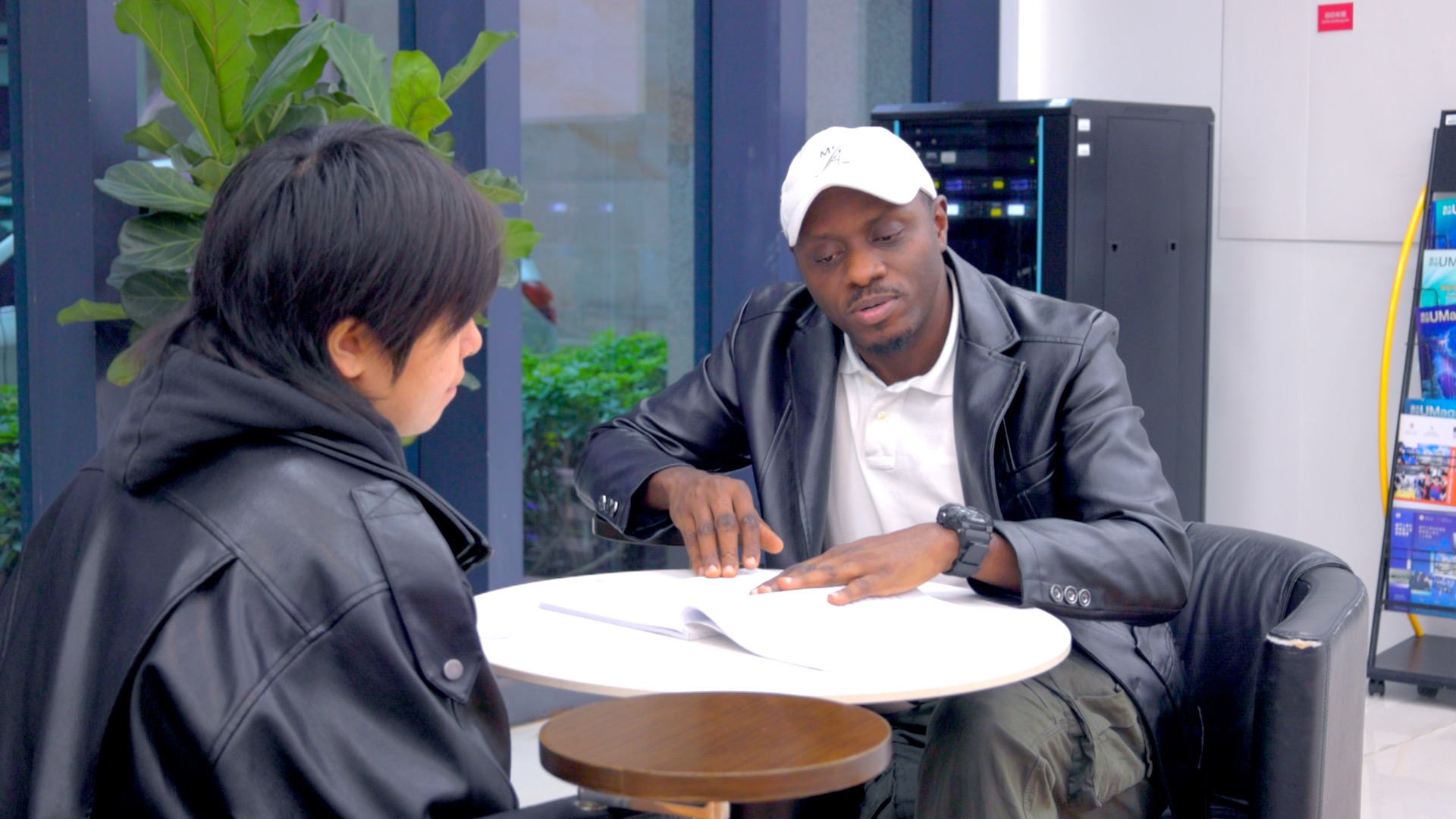
Dr Fadairo works with students from all over the world at UM
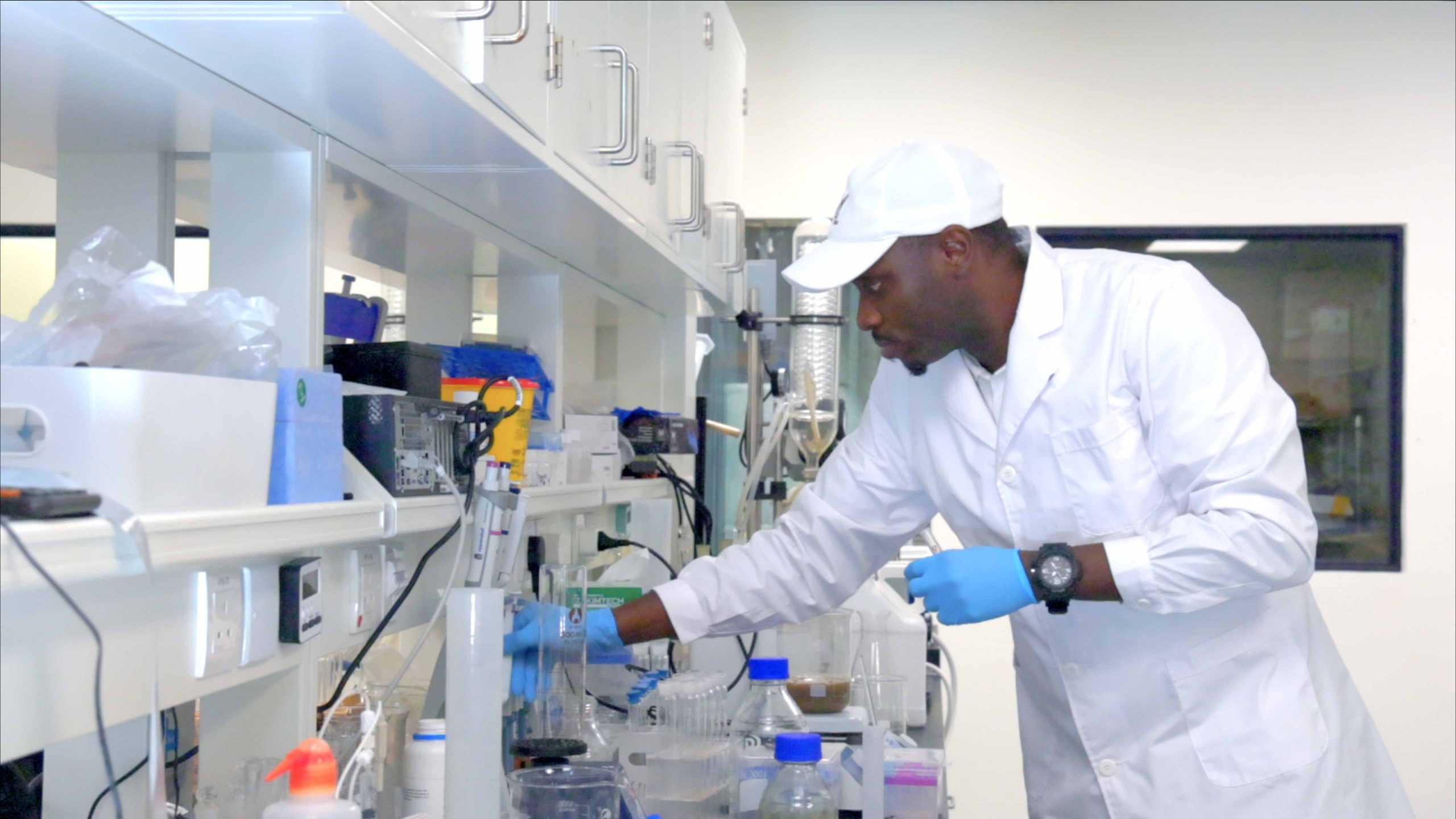
Dr Fadairo conducts experiments in the laboratory at the UM Centre for Regional Oceans
、郝天偉教授(上排右四)及其團隊-scaled.jpg)
Dr Fadairo (5th from left in back row) with Prof Hao Tianwei (4th from right in back row) and members of Prof Hao’s research team