

‘Therefore the Sage puts his own person last, and yet it is found in the foremost place; he acts as if his person were outside of him, and yet his person is preserved’ (聖人後其身而身先,外其身而身存).
This passage from Laozi’s Dao De Jing once helped Rory Edmund O’Neill, assistant professor in the Department of Philosophy and Religious Studies at the University of Macau (UM), navigate the high-pressure corporate world of London and its complex power dynamics. In time, it set him on a path to China, where he immersed himself in the thought of ancient sages and the rich traditions of Chinese philosophy. Now at UM, Prof O’Neill encourages students to engage in dialogue with ancient ideas, bringing classical texts to life and helping students discover enduring insights that may be useful for navigating their own lives.
The ‘living statue’ at the UM Open Day
During UM’s Anniversary Open Day in January, the campus was bustling with activity. Yet at the Faculty of Arts and Humanities booth, one figure invited visitors into a quieter kind of reflection. There sat Prof O’Neill—his face painted metallic grey, his body perfectly still—performing as a living statue. Leaning forward with his chin resting on his hand, Prof O’Neill recreated the iconic pose of Auguste Rodin’s The Thinker.
Prof O’Neill was not merely posing. When a visitor paused, ‘The Thinker’ would slowly come to life and begin an impromptu philosophical exchange. Drawing on the ‘living statue’ art of street performers, Prof O’Neill transformed public space into a classroom and brought philosophy into direct, human encounter.
Why The Thinker?
‘Because it has become so difficult to find time to be still,’ Prof O’Neill explains. The sculpture represents contemplation—and the quiet struggle of thought itself. In an age when information fills every spare moment, reflection has become a rarity. ‘The act of being still, of holding silence, becomes a quiet resistance—a gentle protest against constant noise.’
Through this simple yet striking gesture, Prof O’Neill underscored the value of contemplation on campus. His performance echoed a theme central to Eastern philosophy: that tranquillity can be a form of strength, and that depth is often found in silence. This Irish scholar’s engagement with Eastern thought, however, began more than twenty years ago.
Delving into the depths of Chinese thought
In 2004, at the age of fifteen, O’Neill travelled to Hong Kong to visit his sister, who was working in the city. It was his first trip to Asia and his first meaningful encounter with Chinese culture. The glittering skyline of Victoria Harbour, the dense crowds, and the tea shops tucked quietly into street corners left a lasting impression.
In the years that followed, and back in Ireland, O’Neill began his undergraduate studies in architecture. Before long, however, he realised that what fascinated him most was not the structure of buildings but the thinking behind them. ‘I was always curious about why people built in one way rather than another, and whether design reflected particular ways of thinking,’ he recalls. That curiosity gradually led him towards philosophy.
Eager to explore something new, he changed his major to philosophy and Chinese studies—a combination he came to see as perfectly aligned. ‘Philosophy is about seeing the world in different ways. Learning a foreign language also opens up a new window onto the world.’
After graduation, O’Neill made a decision that surprised many around him: he moved to China.
‘A journey of a thousand miles begins with a single step’ (千里之行,始於足下). The well-known line from Laozi aptly captured the direction of O’Neill’s own path. In 2014, he settled in Hainan, where he spent a year improving his Chinese while teaching English. He later returned to London and worked in China-related intellectual property protection, assisting clients doing business on platforms such as Alibaba. Two years later, he joined a Chinese language education company. Despite building a professional career, however, he felt increasingly drawn back to academic life. ‘I wanted to return to university and pursue research more seriously,’ he says.
In 2018, O’Neill moved to Shanghai to pursue a master’s degree in Chinese philosophy at East China Normal University, later continuing on to doctoral studies. He subsequently completed postdoctoral research at Fudan University. During his bachelor’s programme, he passed HSK Level 6—the highest level of the official Mandarin proficiency examination for non-native speakers under the previous HSK system. Although his master’s courses were taught in English, he chose to undertake his PhD in a Chinese-medium programme, embracing what he knew would be a significant challenge. Surrounded by Chinese classmates, he took part in seminars, delivered presentations, and wrote academic papers entirely in Chinese.
‘It would be untrue to say I wasn’t anxious,’ he admits. ‘When it was my turn to present my research, my palms would sweat. But looking back, pushing myself to adapt is what truly taught me to read classical Chinese and to participate fully in Chinese academic life.’
A dialogue across time and space
In 2025, O’Neill left Fudan to join UM’s Department of Philosophy and Religious Studies. Macao’s location within the Guangdong-Hong Kong-Macao Greater Bay Area—an ideal setting for comparative philosophy—was certainly part of the appeal. He was also drawn to the department’s intellectual environment, not least the influence of UM faculty member Prof Hans-Georg Moeller, who had been O’Neill’s undergraduate supervisor and the scholar who first introduced him to Chinese philosophy. ‘UM has a warm and vibrant academic atmosphere. Whether I’m discussing ideas with students or exchanging views with colleagues, it feels stimulating and open,’ he says.
In one of his Daoism courses, after introducing the philosophical reflections found in a chapter of the Zhuangzi, Prof O’Neill poses an unexpected question to his students: ‘Can you see how this relates to your WeChat Moments?’
The classroom falls silent. Prof O’Neill then explains that modern communication platforms such as WeChat create shared public spaces that connect communities—yet also inundate people with constant snapshots from multiple perspectives. ‘Daoism offers a kind of therapy,’ he says. ‘It teaches us how to protect our minds amid the flood of information and how to find a balance between movement and stillness.’
The question is not posed merely for effect. Prof O’Neill has published research examining the relationship between Daoism and social media, which has attracted considerable attention. Although the texts Prof O’Neill studies are ancient, he believes that philosophy must remain engaged with contemporary life.
This belief also shapes the way Prof O’Neill approaches teaching. He does not see himself simply as a transmitter of knowledge. ‘Many of my students come from Chinese backgrounds. They grew up studying classical Chinese and often have insights that I don’t,’ he says. ‘My aim is to help them see that philosophy is alive—that words written two thousand years ago still speak to us today.’
Under his guidance, students begin to ask further questions about what ancient wisdom might mean for someone scrolling on a smartphone.
In the classroom, Prof O’Neill becomes more than a lecturer; he becomes a bridge. On one side stand Laozi and Zhuangzi, their ideas reaching across centuries. On the other stand young people navigating the pressures of digital life. Between them stands Prof O’Neill, gently reminding them: ‘The questions of ancient times are still our questions today.’
Bringing ancient thought into present life
Prof O’Neill carries this ancient wisdom with him wherever he goes. Often to hand is a small, well-thumbed copy of the Dao De Jing, also known as the Laozi—a book that serves as both comfort and compass. Within its pages, he finds not only ancient insight but also traces of his own evolving engagement with Chinese philosophy.
‘I started reading this book when I was working in London—on the Tube or the bus,’ he recalls. ‘I was in a high-pressure business environment, and the Laozi helped me navigate complex power dynamics. When I felt uncertain, it helped clear my mind. There’s a calm in it—a clarity that comes from seeing what endures and what is fleeting.’
Prof O’Neill turns to Chapter Seven and quietly recites: ‘The reason why Heaven and Earth are able to endure is that they do not live for themselves, and they thereby live long. Therefore, the Sage puts his own person last, and yet it is found in the foremost place; he acts as if his person were outside of him, and yet his person is preserved. Is this not because he is selfless? And that is how he achieves his own fulfilment.’
‘To me, this passage suggests that when we let go of self-centred desire and look beyond ourselves, we see there is often no strong conflict between one’s own interests and those of others,’ he explains. ‘Words written more than two thousand years ago can still speak to us today. That continuity across time is remarkable.’
This enduring engagement has shaped Prof O’Neill’s academic focus. He specialises in Pre-Qin philosophy, particularly the lesser-known text the Shenzi.
‘While the Laozi and Zhuangzi are widely studied, the Shenzi has received far less attention,’ he notes. He offers three reasons for concentrating on this text: first, his interest in the political dimensions of early Chinese thought, for which Shenzi’s position within the Legalist (法家) and Huang-Lao (黃老) traditions is especially significant; second, the concise nature of the Shenzi, which allows for close textual analysis without heavy reliance on generalisations; and third, the intellectual value of exploring a relatively understudied text.
At UM, Prof O’Neill’s research is supported by a department with strong expertise in Chinese and comparative philosophy. Active international exchange and an engaged community of scholars provide a stimulating environment. The lectures and seminars held regularly by the department not only foster academic dialogue but also allow Prof O’Neill to examine and refine his belief that ‘ancient thought lives in the present’.
One of Prof O’Neill’s current research interests is the concept of ‘public-mindedness’ (公) in Pre-Qin Legalist thought—how shared standards can shape political community. He notes that in Shenzi’s writings, the idea of ‘law’ (法) is often associated with practical instruments such as weights and measures, contracts, tallies, and official records. ‘For Shenzi, these were ways of establishing common standards and limiting private interests,’ Prof O’Neill explains. ‘This stands in contrast to the Confucian approach, which sought the public good through the personal cultivation of rulers and ministers.’
The Thinker’s silence
From Ireland to China; from architecture to philosophy; from English to Chinese; from Laozi to Shenzi; and from Shanghai to Macao—Prof O’Neill’s journey reflects an ongoing philosophical dialogue across cultures and centuries. That dialogue reaches back more than two thousand years, yet its central concern remains urgent and contemporary: How do we find tranquillity in the midst of chaos? What remains constant when so much around us is changing? How do we maintain clarity when we are surrounded by a relentless flow of information?
Perhaps the answer was already present on that Open Day afternoon. Amid the surrounding bustle, Prof O’Neill simply sat in silence. ‘The Thinker’ reminds us that in a noisy world, wisdom is not always found in speaking more—but in knowing when to pause.
Profile of Prof Rory Edmund O’Neill
Prof Rory Edmund O’Neill is assistant professor in the Department of Philosophy and Religious Studies at UM, specialising in early Chinese philosophical thought. Born in Ireland, he studied Chinese Studies and Philosophy at University College Cork before continuing his academic career in Shanghai, where he earned his PhD in Philosophy from East China Normal University and subsequently completed postdoctoral research at Fudan University.
At UM, Prof O’Neill teaches political philosophy and Daoist thought. His research interests include Pre-Qin philosophy, Daoism, Chinese Legalism, and political philosophy. He is actively involved in academic organisations including the European Association for Chinese Philosophy and the International Society for Chinese Philosophy.
Chinese Text: U Wai Ip, Senior UM Reporter Yang Ruiqi & UM Reporter Loi Sze Ying
Chinese Editor: Gigi Fan
English Translation: Bess Che & Gloria Kuok
Photo: Senior UM Reporter Yang Ruiqi, with some provided by the interviewee
Video: Hasen Cai, David Tong, Sam Chan, Reporter Dean Gao
Source: My UM Issue 152
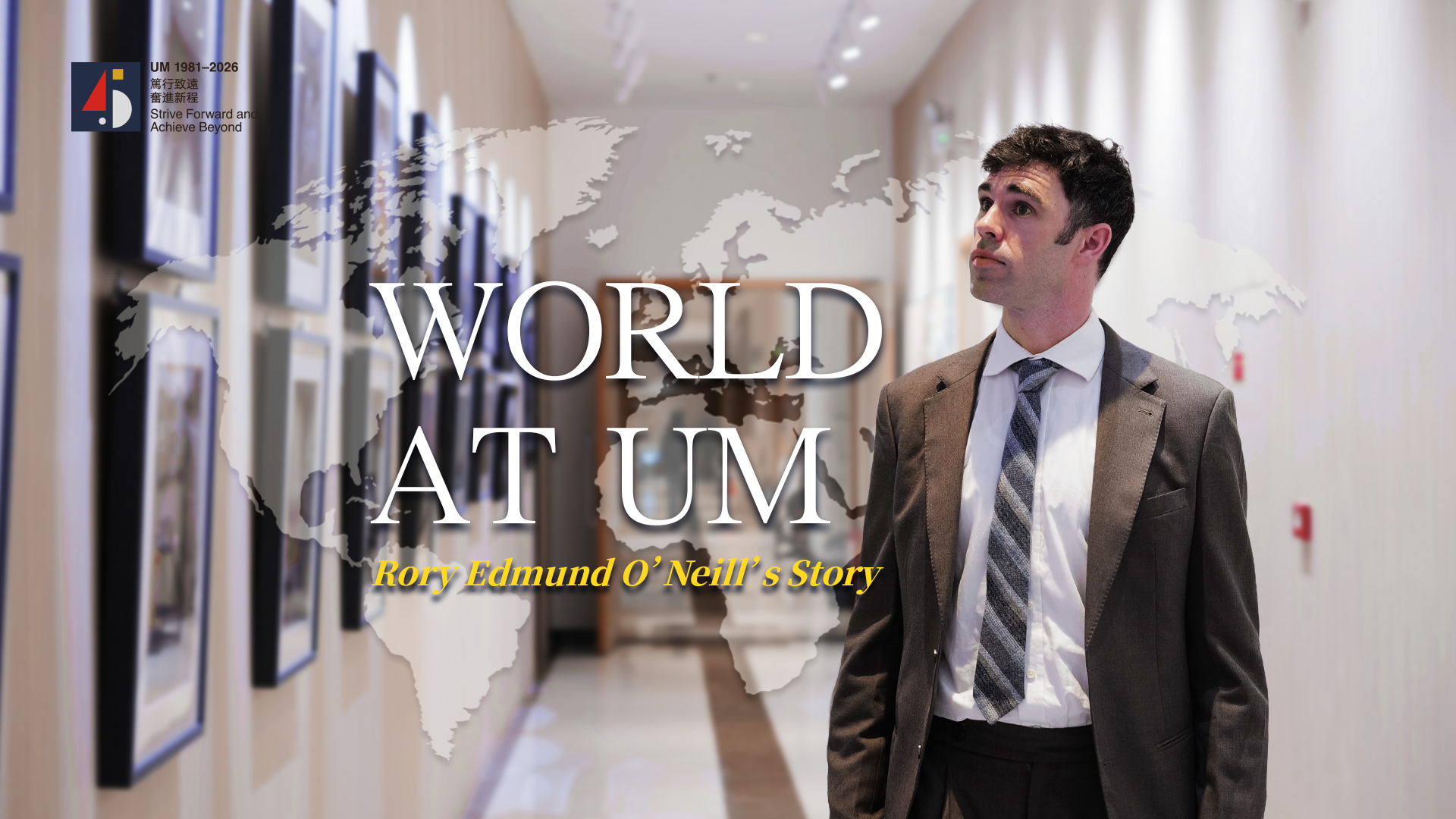
Prof Rory Edmund O’Neill
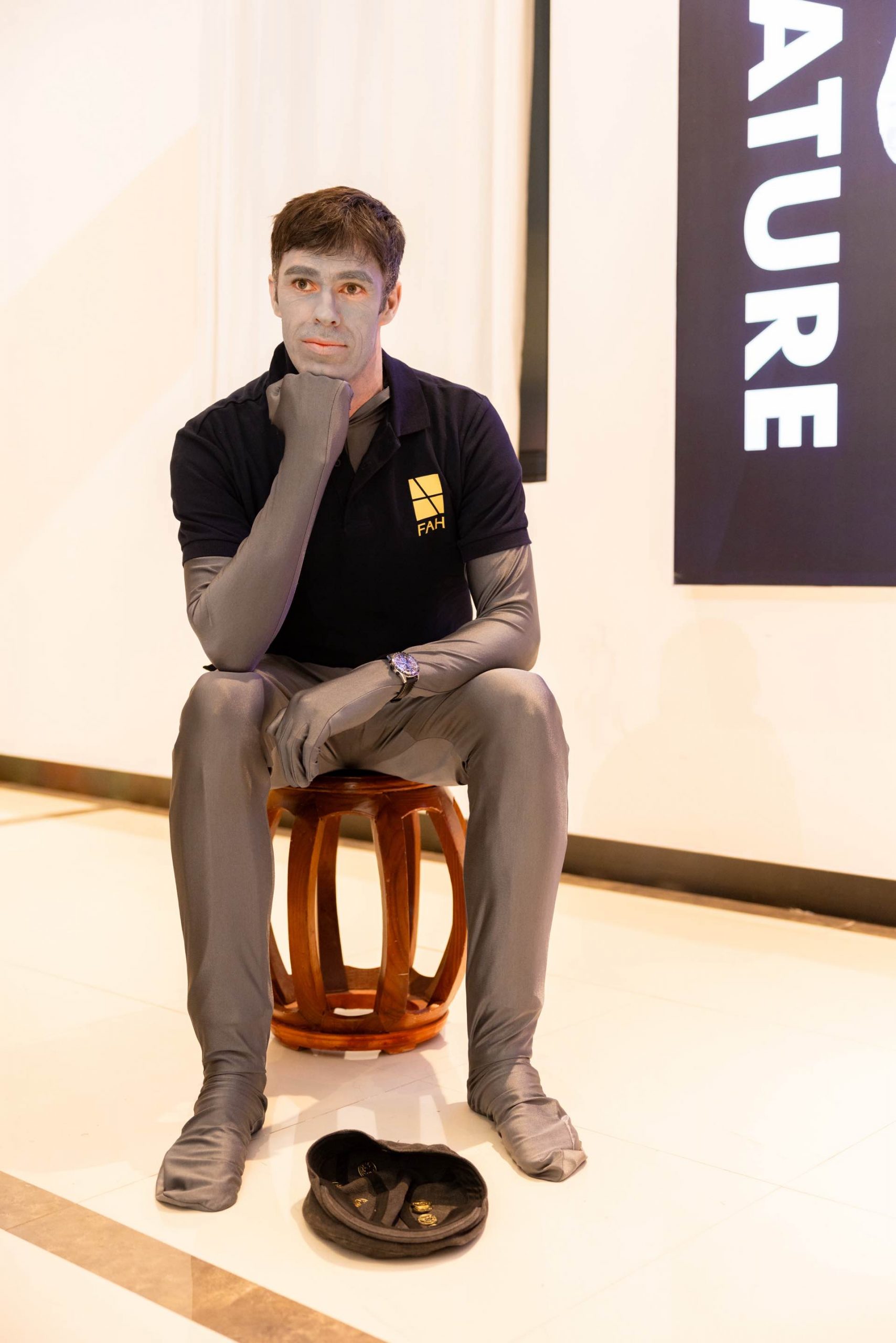
Prof O’Neill performs as a living statue inspired by ‘The Thinker’ during the UM Open Day
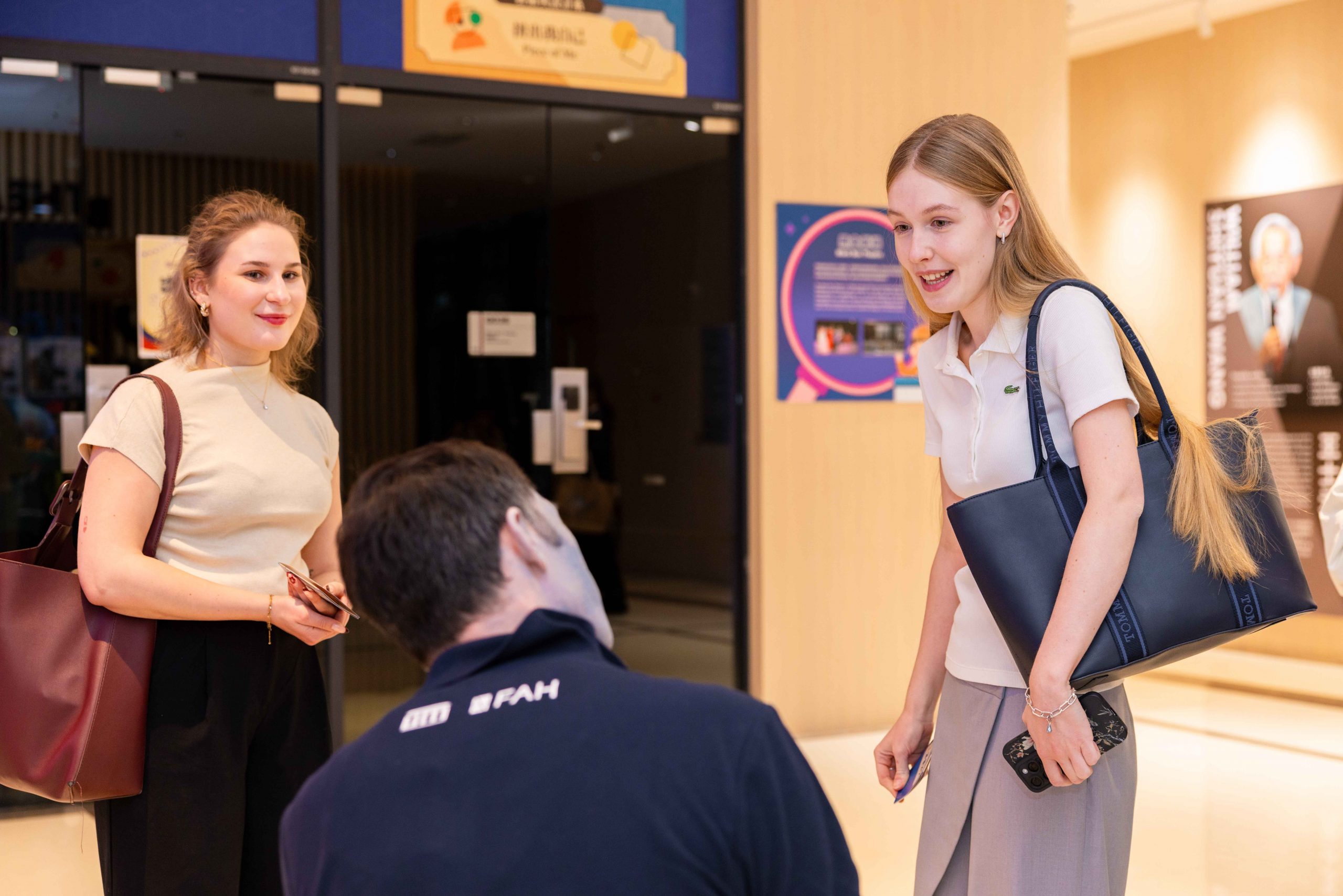
Prof O’Neill engages visitors in philosophical dialogue
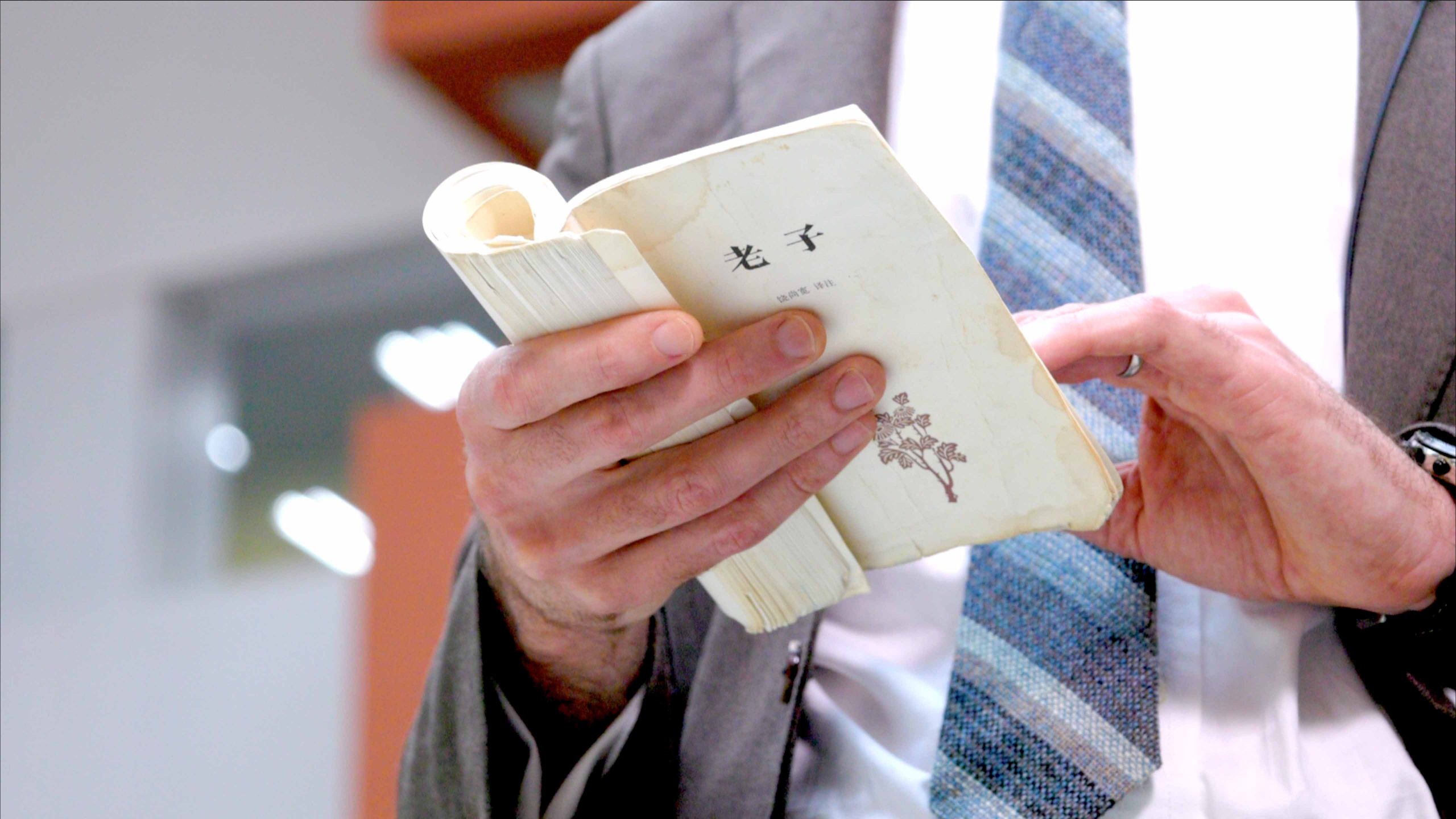
Laozi’s Dao De Jing has accompanied Prof O’Neill over the years, nourishing both his scholarship and his life
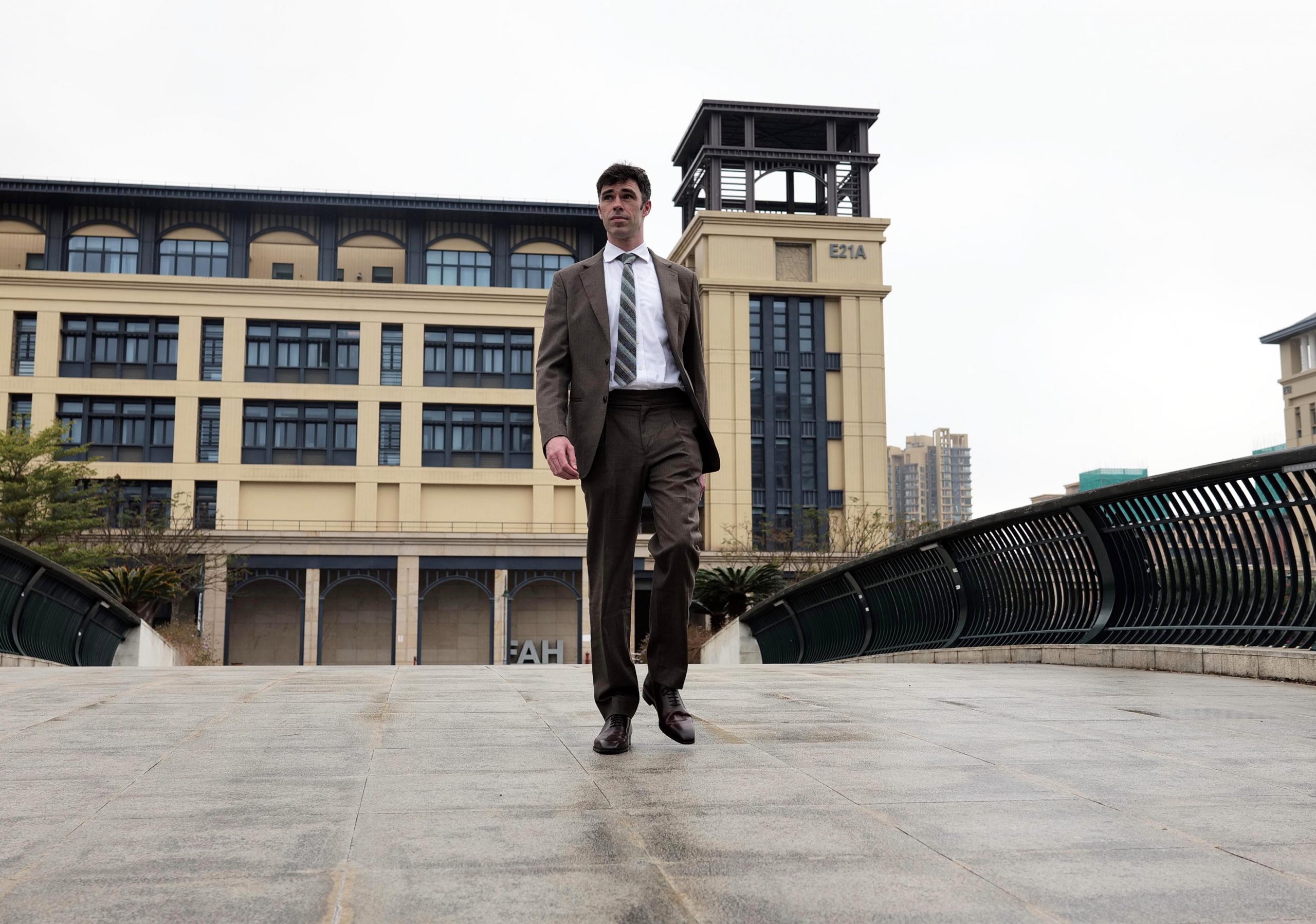
From Ireland to Shanghai and then to Macao, Prof O’Neill’s academic journey reflects an ongoing intellectual dialogue
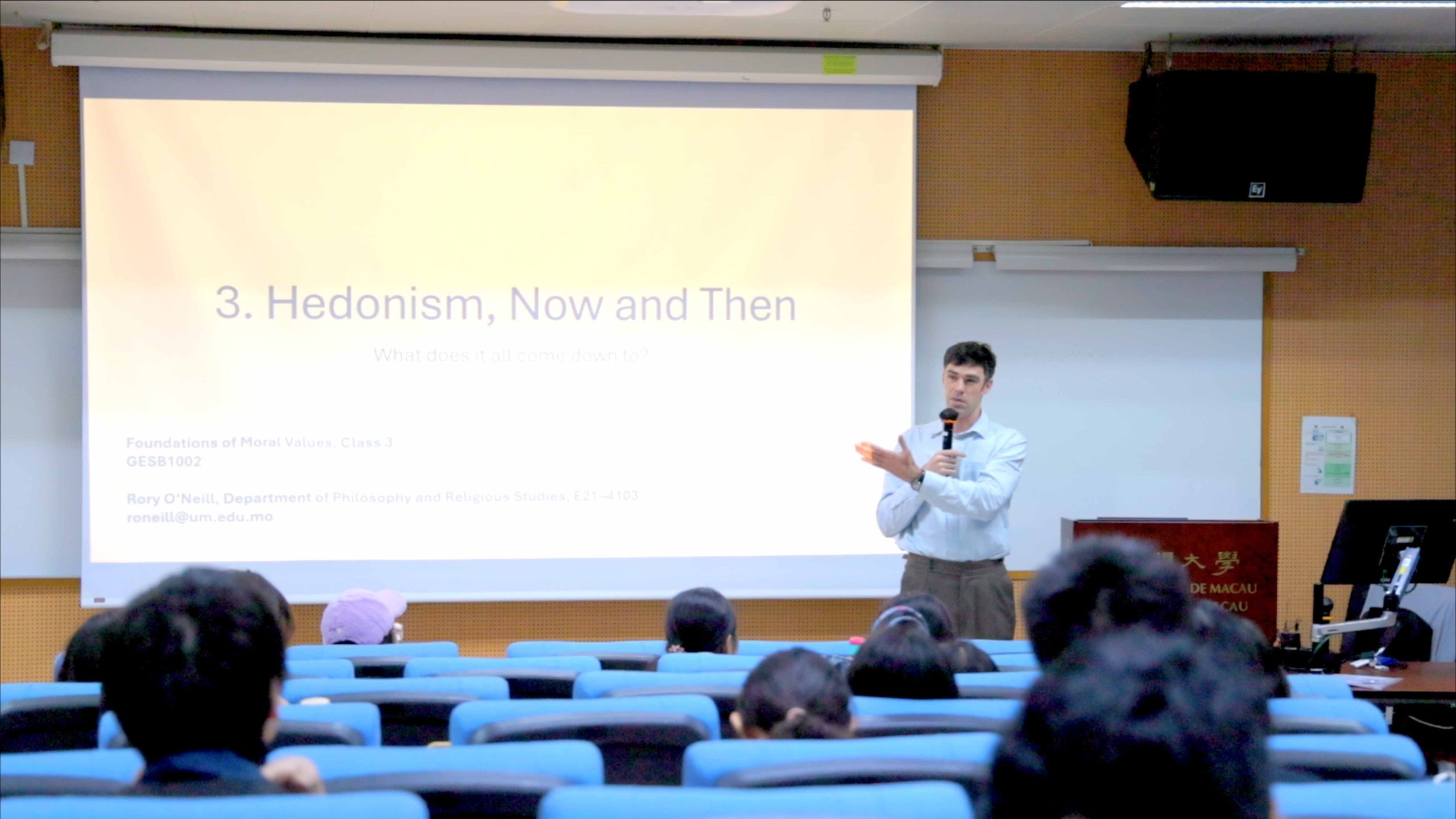
Prof O’Neill guides students in reflecting on the relationship between philosophy and their own lives