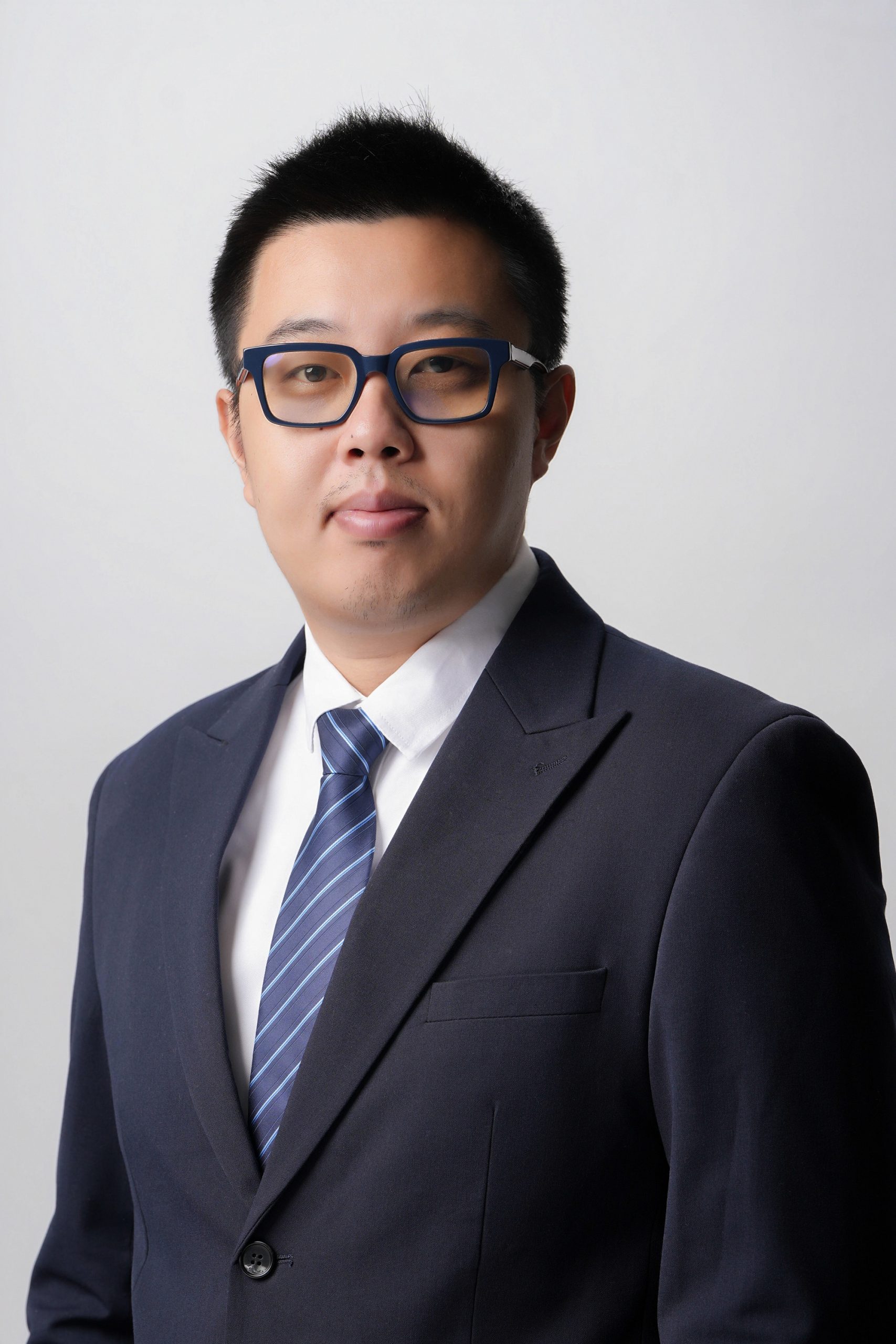
A research team led by Song He, assistant professor in the Institute of Chinese Medical Sciences (ICMS) at the University of Macau (UM), has systematically revealed the roles of nuclear factor I (NFI) family members in osteoarthritis, cancer, and muscle growth and development. Through structural analysis, the team also explored active compounds from traditional Chinese medicine (TCM) to modulate these transcription factors as potential therapeutic strategies. The findings have been published in the leading international journals Nature Communications and Nucleic Acids Research.
At the structural and metabolic regulatory level, the team determined high-resolution crystal and solution structures of NFIA bound to DNA, defining sequence-specific recognition of the TGGCA motif and mapping key residues that form precise contacts in the DNA major groove. When integrated with osteoarthritis models, the results show that NFIA regulates fatty-acid metabolism enzymes, and that its dysregulation is associated with metabolic imbalance in chondrocytes. These findings provide a structural basis for mechanism-driven intervention and subsequent structure-guided screening.
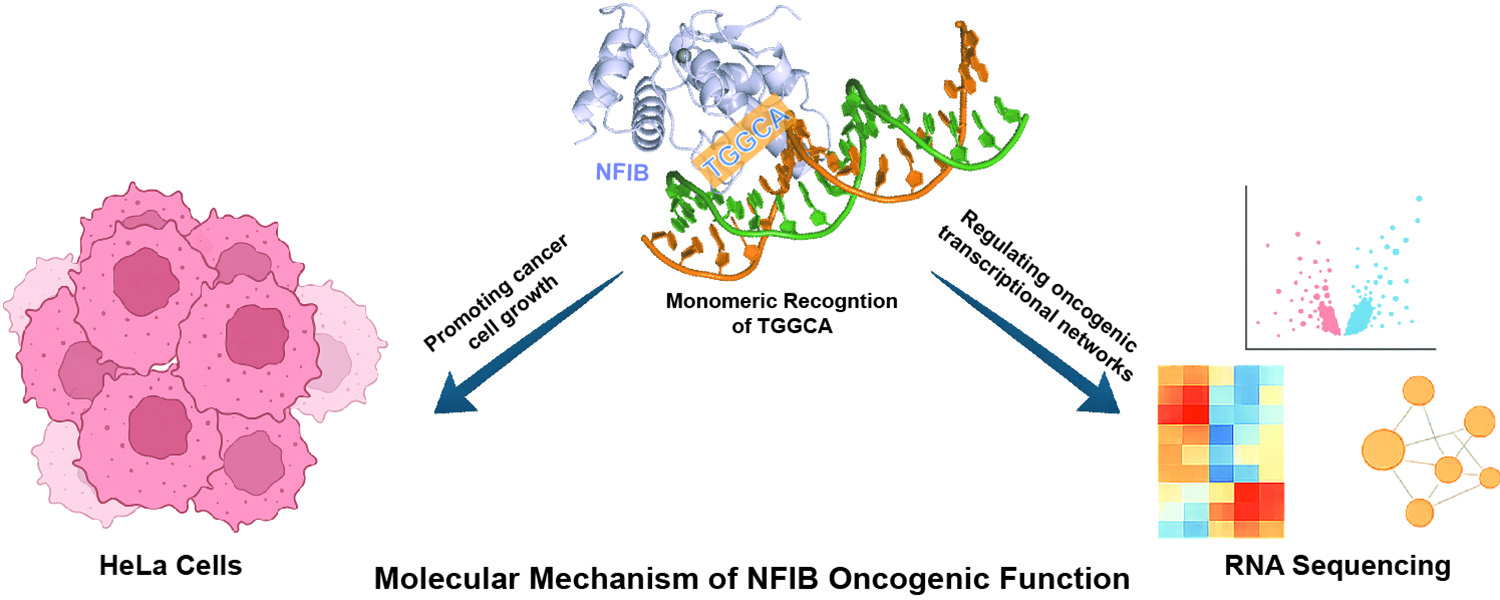
In the context of cancer transcriptional regulation, the team resolved an atomic-resolution structure of the NFIB–DNA complex and combined this with CRISPR knockout experiments and RNA-sequencing. The results show that NFIB promotes proliferation, migration, and invasion in HeLa cells and modulates the expression of multiple cancer-related genes. Structural analysis and mutational validation further indicate that NFIB’s DNA recognition relies on conserved base-specific contacts, informing the development of targeted anti-cancer strategies.
Building on these structural insights, the team established a high-throughput screening framework for TCM active compounds that target transcription-factor mechanisms. This ‘structure-to-efficacy’ pipeline enables the discovery of natural products capable of modulating key transcription factors, supporting the mechanism-based modernisation of TCM and the development of precision therapeutics. The approach offers promising translational avenues for osteoarthritis, cancer, and other major diseases.
The studies were jointly conducted by UM ICMS and Washington University in St. Louis, in collaboration with Xiangya Hospital of Central South University, Shanghai University of Traditional Chinese Medicine, the Institute of Biophysics at the Chinese Academy of Sciences, Hunan University, Soochow University, and Tsinghua University. UM doctoral student Zhu Ci is the first author of both studies, while UM master’s students Wang Yueyu and Chen Xi are co-first authors of one of the studies. UM is listed as the first affiliated institution in the published articles. The research projects were supported by the Science and Technology Development Fund of the Macao SAR (File Nos: 0068/2023/ITP2, 0143/2025/ITP2, 0007/2022/AKP) and UM (File No: MYRG-GRG2024-00283-ICMS-UMDF, SRG2023-00054-ICMS). The full versions of the research articles are available at: https://www.nature.com/articles/s41467-025-67641-4 (Nature Communications) and https://academic.oup.com/nar/article/53/22/gkaf1369/8402087 (Nucleic Acids Research).
| Source: Institute of Chinese Medical Sciences | |
| Media Contact Information: | |
| Communications Office, University of Macau | |
| Albee Lei | Tel: (853) 8822 8004 |
| Bell Leong | Tel: (853) 8822 8009 |
| Email: | prs.media@um.edu.mo |