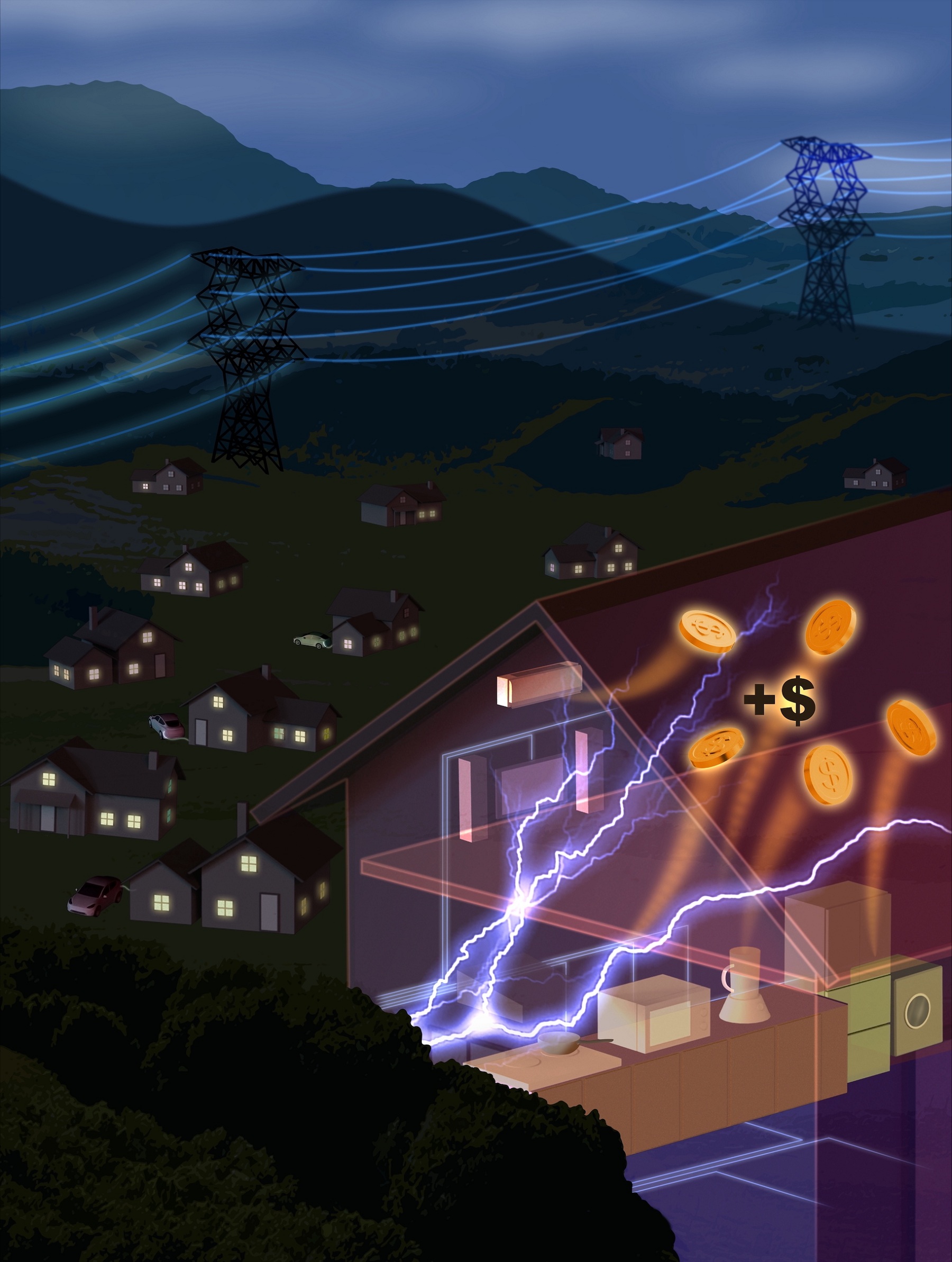
Yang Yang, assistant professor in the Department of Electrical and Computer Engineering and the State Key Laboratory of Internet of Things for Smart City at the University of Macau (UM), has conducted a study examining residential consumers’ responses to negative electricity pricing and its potential impacts on power systems. The findings provide valuable insights for the design of future electricity markets, demand response policies, and smart home automation strategies. The research has been published in Nature Energy, a leading international journal in the field of energy research.
Nature Energy publishes only around 100 research articles each year from research teams worldwide. Yang’s study, titled Shaping Residential Electricity Demand with Negative Pricing, is also featured in a Nature Energy Research Briefing in January 2026. This marks the first time that a paper has been published in Nature Energy with UM listed as the primary affiliation.
With the rapid growth of renewable energy, electricity oversupply has become increasingly common. In response, some countries have begun exploring electricity consumption incentive mechanisms (whereby consumers are paid to use electricity through negative pricing). Under these new market signals, whether residential users are willing to increase electricity consumption and whether such behaviour could affect grid stability have become important questions warranting in-depth investigation.
Yang conducted a comprehensive study combining a survey of 1,918 US residents with empirical electricity usage data. The research systematically examined how users respond to different levels, timings, and durations of negative pricing, as well as the secondary effects of these responses. The findings reveal that over 75% of surveyed residents expressed a willingness to increase electricity consumption during periods of negative pricing, indicating strong potential for demand-side flexibility. However, excessive responses could lead to dramatic spikes in electricity demand—up to twofold or even tenfold in some regions—potentially threatening grid reliability. The study uncovers a ‘double-edged sword’ effect of negative pricing: while it can incentivise flexible consumption and support renewable energy integration, poorly designed pricing schemes may trigger load surges and exacerbate energy equity concerns.
Yang received his PhD in Industrial and Systems Engineering from the National University of Singapore in 2024 and joined UM as an assistant professor in 2025. His research interests include electricity markets, power system frequency regulation, operations research, and socio-technical systems.
Yang is the first author of the study, with Peng Chih-Hsien, associate professor in the Department of Electrical and Computer Engineering at the National University of Singapore, serving as the corresponding author. The research was supported by UM (File no: SRG2025-00044-IOTSC) and the Science and Technology Development Fund of the Macao SAR (File no: 001/2024/SKL). The full version of the research article can be viewed at: https://www.nature.com/articles/s41560-025-01901-x .
| Source: State Key Laboratory of Internet of Things for Smart City | |
| Media Contact Information: | |
| Communications Office, University of Macau | |
| Albee Lei | Tel: (853) 8822 8004 |
| Jason Leong | Tel: (853) 8822 8322 |
| Email: | prs.media@um.edu.mo |