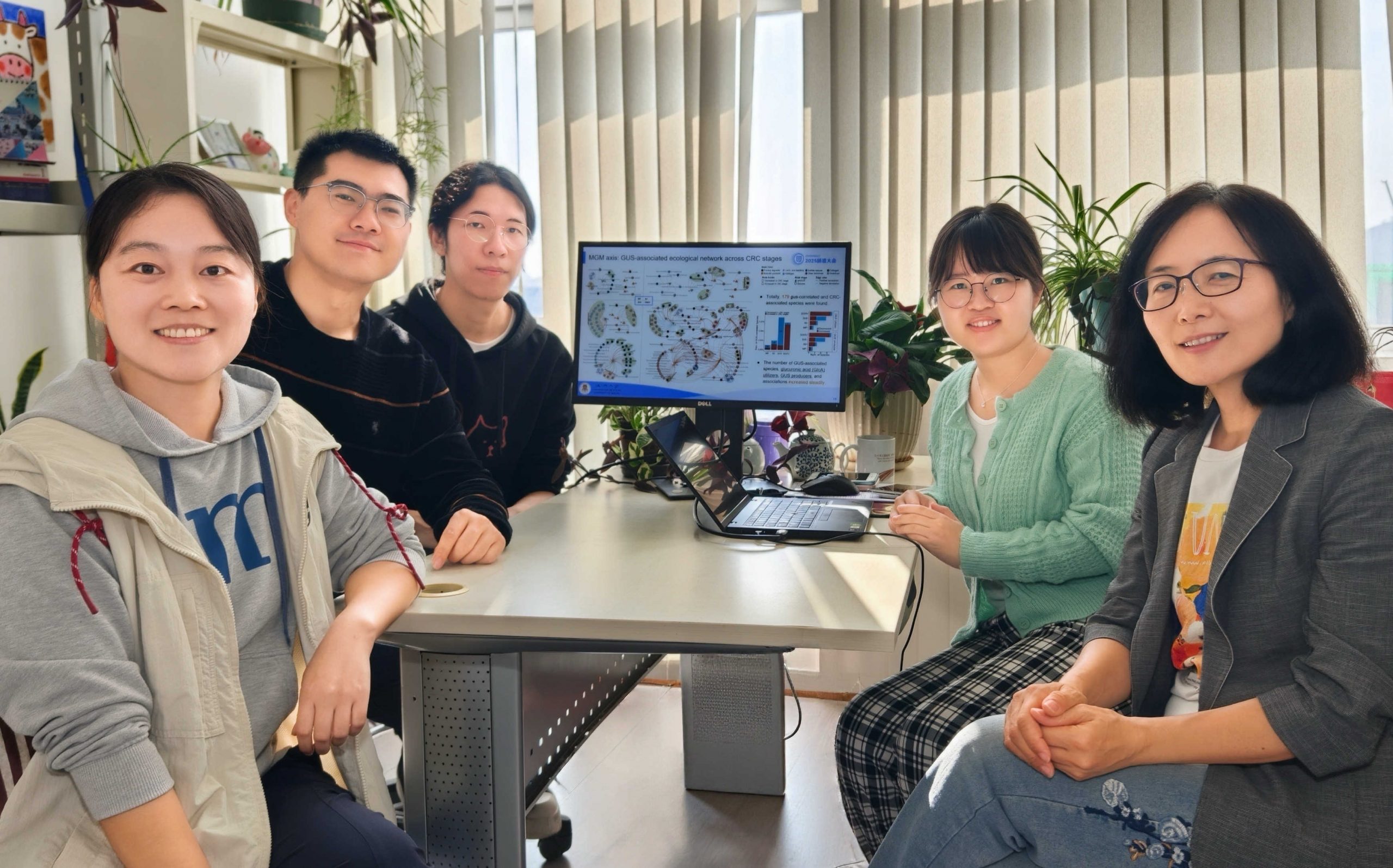
A research team led by Yan Ru, professor in the Institute of Chinese Medical Sciences (ICMS) and the State Key Laboratory of Mechanism and Quality of Chinese Medicine at the University of Macau (UM), has, for the first time, systematically revealed the dynamic landscape of gut microbial β-glucuronidases (GUSs) during the development of colorectal cancer (CRC) and constructed a functional framework for the ‘microbiota-GUS-metabolite’ axis in CRC progression. The findings have been published in the leading international journal Nature Communications.
CRC is a common malignant cancer worldwide, with its incidence rising among young adults. The onset and progression of the disease are closely linked to gut dysbiosis and related metabolic disturbances. GUSs are an important class of metabolic enzymes widely present in the human gut microbiota. They can reverse the glucuronidation ‘detoxification’ pathway catalysed by highly expressed host hepatic uridine diphosphate-glucuronosyltransferases (UGTs), thereby playing an important role in maintaining the metabolic homeostasis of various biologically important endogenous compounds (such as bilirubin, steroid hormones, and bile acids) and the disposition of exogenous substances (such as drugs and dietary or environmental carcinogens).
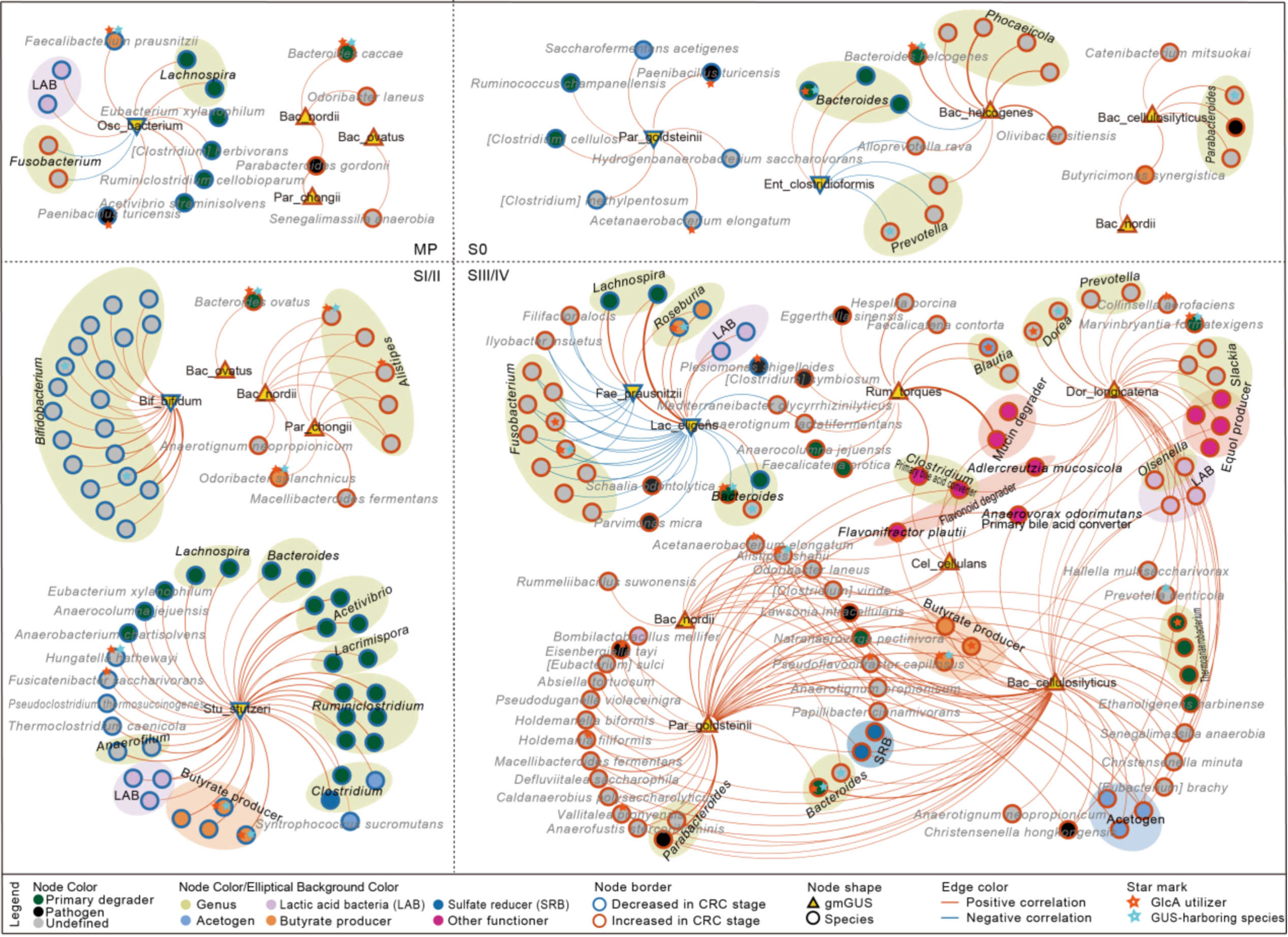
Although previous studies have reported significantly higher faecal GUS activity in CRC patients than in healthy individuals, the overall patterns of GUS changes in CRC and their functional roles have remained unclear. By analysing public cohort data using an innovative research strategy, the UM team successfully identified 550 GUSs from the human gut microbiota. They then mapped, for the first time, the dynamic dysregulation of GUSs across disease stages, from adenoma to advanced CRC, demonstrating the promising potential of GUSs for early diagnosis and prognosis prediction in CRC. By constructing the ‘microbiota-GUS-metabolite’ axis, the team systematically elucidated its perturbation characteristics at different CRC stages. This included the enrichment of harmful bacteria and significant disruptions in metabolic pathways such as those for amino acids and vitamins. Notably, cell co-culture experiments and transcriptomic analyses revealed that the GUS from Bacteroides cellulosilyticus, which shows stage-specific changes, can upregulate processes like RNA transcription and DNA replication in tumour cells, potentially contributing to cancer progression.
These findings lay a crucial theoretical and data foundation for the future development of GUS-based early diagnostic biomarkers and novel therapeutic targets. As the first comprehensive analysis of GUS evolution and the perturbation patterns of the ‘microbiota-GUS-metabolite’ axis during CRC development, the study offers a novel perspective for understanding how gut microbiota influence CRC and supports further translational research.
Yan Ru is the corresponding author of the study, with Chen Junru, a doctoral student in ICMS, as the first author. Doctoral students Li Yan, Tang Shuai, and Jin Wenyu also contributed to the research. The study was supported by the Science and Technology Development Fund of the Macao SAR (File Nos: 0091/2021/A2, 0098/2019/A2, and 005/2023/SKL), the Shenzhen-Hong Kong-Macao Science and Technology Programme (Category C) (File No: SGDX20210823103805038), and UM (File No: MYRG-GRG2023-00241-ICMS-UMDF). The full version of the study is available at: https://rdcu.be/eR5CM.
| Source: Institute of Chinese Medical Sciences | |
| Media Contact Information: | |
| Communications Office, University of Macau | |
| Albee Lei | Tel: (853) 8822 8004 |
| Bell Leong | Tel: (853) 8822 8009 |
| Email: | prs.media@um.edu.mo |