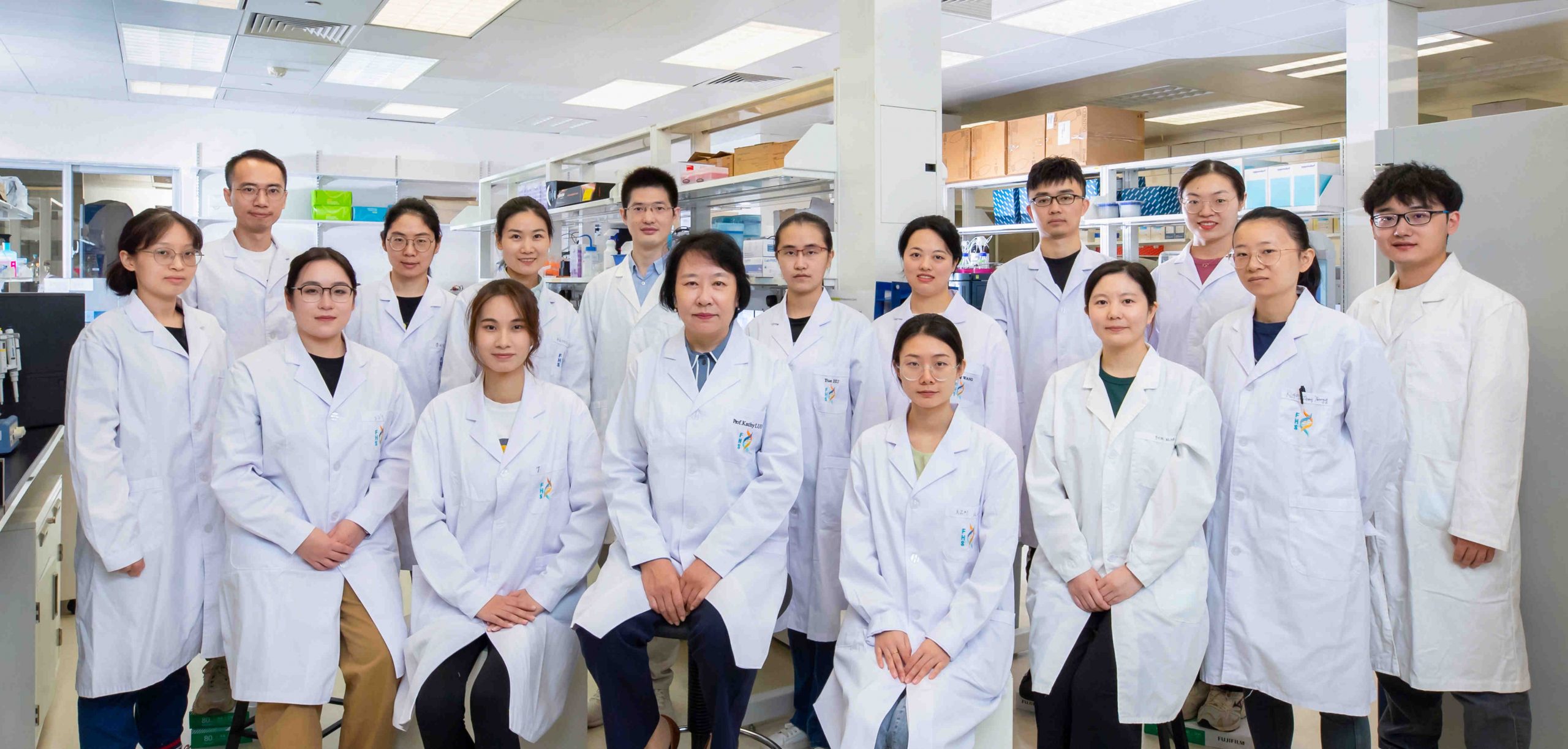
A research team led by Kathy Qian Luo, professor in the Faculty of Health Sciences (FHS) at the University of Macau (UM), has uncovered a new mechanism that enables triple-negative breast cancer (TNBC) to evade attacks from the immune system. The study shows that TNBC cells resist natural killer (NK) cell-mediated killing through an interleukin-11 (IL-11)-mediated trans-signalling pathway. This discovery provides new insights into strategies for enhancing the efficacy of NK cell-based immunotherapy. The findings have been published in the leading international journal Advanced Science.
TNBC is the most aggressive subtype of breast cancer. Due to the lack of well-defined therapeutic targets, patients with TNBC receive little benefit from hormone therapy or anti-HER2 targeted treatments, leaving chemotherapy as the primary option for treatment. Furthermore, TNBC is highly invasive, carries a high risk of metastasis, and frequently develops drug resistance. Although NK cell-based immunotherapy has gained significant attention and made considerable progress in recent years due to the cells’ ability to directly recognise and kill tumour cells, TNBC often employs various pathways to evade NK cell-mediated attacks. The UM research team has elucidated the mechanisms through which TNBC cells resist NK cell-mediated killing.
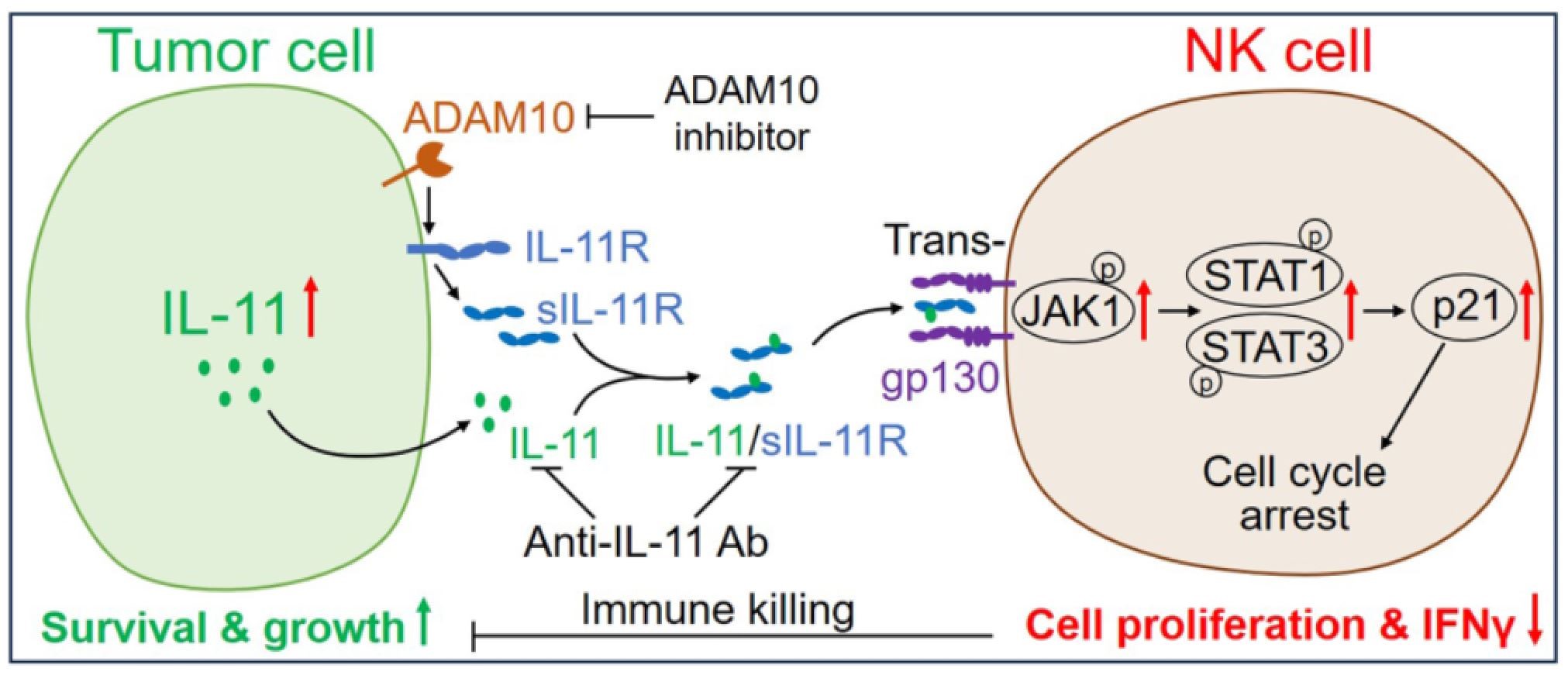
The study found that some aggressive TNBC cells acquire resistance to NK cell-mediated killing by secreting IL-11, which binds to its own shed soluble receptor (sIL-11R) to form an ‘IL-11/sIL-11R’ complex. This complex then binds to the gp130 receptor on the surface of NK cells to activate the intracellular JAK1/STAT1/3 signalling pathway. This activation upregulates p21 expression, leading to cell cycle arrest in NK cells. The reduction of NK cells proliferation subsequently decreases the production and secretion of interferon-gamma (IFN-γ), thereby weakening NK cell cytotoxicity and enabling TNBC cells to evade immune destruction.
To validate these findings, the team used inhibitors to block either IL-11 or sIL-11R, successfully restoring the proliferation of NK cells. More importantly, analysis of clinical samples confirmed that IL-11 expression is significantly elevated in tumour tissues from TNBC patients and shows a significant negative correlation with the number of NK cells infiltrated into the tumour tissues. These results provide strong clinical evidence supporting the critical role of IL-11 in helping TNBC cells evade immune surveillance.
Moreover, the study reveals the molecular mechanism through which TNBC cells utilise IL-11-mediated trans-signalling pathway to resist NK cell-mediated immune attack. The findings pave the way for the precise development of IL-11-targeted drugs and offer novel strategies for optimising NK cell-based immunotherapy in treating patients with TNBC.
Kathy Qian Luo is the corresponding author of the study, with Yang Hongmei, a postdoctoral fellow in UM FHS, as the first author. FHS doctoral students Jia Hao, Wu Renfei, Tong Haibo, and Chen Liping also contributed to the research. The study was funded by UM (File No: 2022-00025-FHS), the Science and Technology Development Fund of the Macao SAR (File Nos: 068/2017/A2, 0147/2020/A3, 044/2021/APD, 0004/2021/AKP), and the Ministry of Education Frontiers Science Center for Precision Oncology (File No: SP2023-00001-FSCPO). The full version of the research article is available at: https://doi.org/10.1002/advs.202515772.
| Source: Faculty of Health Sciences | |
| Media Contact Information: | |
| Communications Office, University of Macau | |
| Albee Lei | Tel: (853) 8822 8004 |
| Bell Leong | Tel: (853) 8822 8009 |
| Email: | prs.media@um.edu.mo |